
Tosca and the Art of Illusion
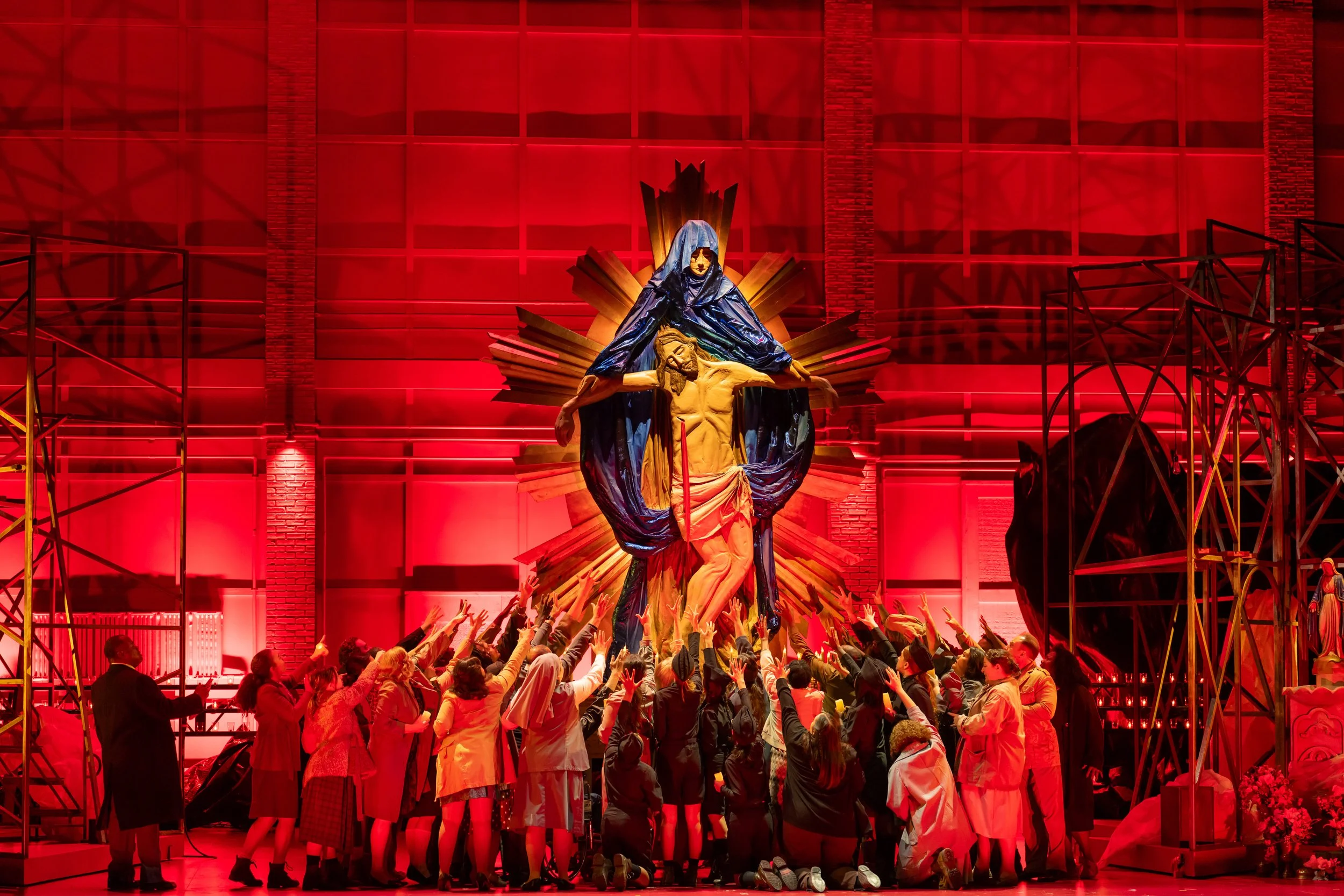
Puccini’s political thriller comes to Detroit in a production that draws on Francis Bacon, religious imagery, and the dangerous distance between appearance and reality.
Tosca begins in a church and ends on the roof of a fortress. Between the two, Giacomo Puccini gives us a political fugitive, a jealous opera singer, a painter, and a police chief who will stop at nothing to get what he wants. The action unfolds in less than twenty-four hours. By the final curtain, almost everyone is dead.
First performed in Rome on January 14, 1900, Tosca remains one of opera’s great thrillers. Its heroine, Floria Tosca, is a celebrated singer in love with the painter Mario Cavaradossi, who has secretly sheltered an escaped political prisoner. When Baron Scarpia, the city's ruthless chief of police, discovers their involvement, he uses Tosca's jealousy to ensnare her lover, then demands a terrible price for his freedom.
Puccini adapted the story from Victorien Sardou’s five-act play La Tosca, written for the actress Sarah Bernhardt. Working with librettists Luigi Illica and Giuseppe Giacosa, he condensed the drama into three acts, creating a work in which music and action are almost inseparable.
Puccini was meticulous about the sound of Rome. He researched the city's church bells and liturgical traditions, incorporating them into a score that moves between intimate confession and public spectacle. The first act culminates in a monumental Te Deum, a Catholic hymn of praise, while Scarpia privately plots his crimes. The contrast is chilling: an entire congregation sings of divine glory as the police chief contemplates murder and sexual coercion.
Later, Tosca's Vissi d'arte ("I lived for art") becomes a desperate appeal to God, while Cavaradossi's E lucevan le stelle ("The stars were shining") recalls a moment of tenderness as he awaits execution. Both arias suspend the action long enough to reveal what the characters stand to lose.
A different kind of Tosca
At Detroit Opera, director Louisa Proske relocates the action from Napoleonic Rome to an unspecified authoritarian state in the twentieth century. First presented at the Glimmerglass Festival in 2025, the production considers how artists navigate political repression, particularly when the danger arrives disguised as ordinary life.
Its most striking visual reference comes from the British painter Francis Bacon. In an interview published in Detroit Opera's program, Proske describes how the production's red theatrical environment brought to mind Bacon's crucifixion triptychs, with their distorted bodies and stark, enclosed spaces.
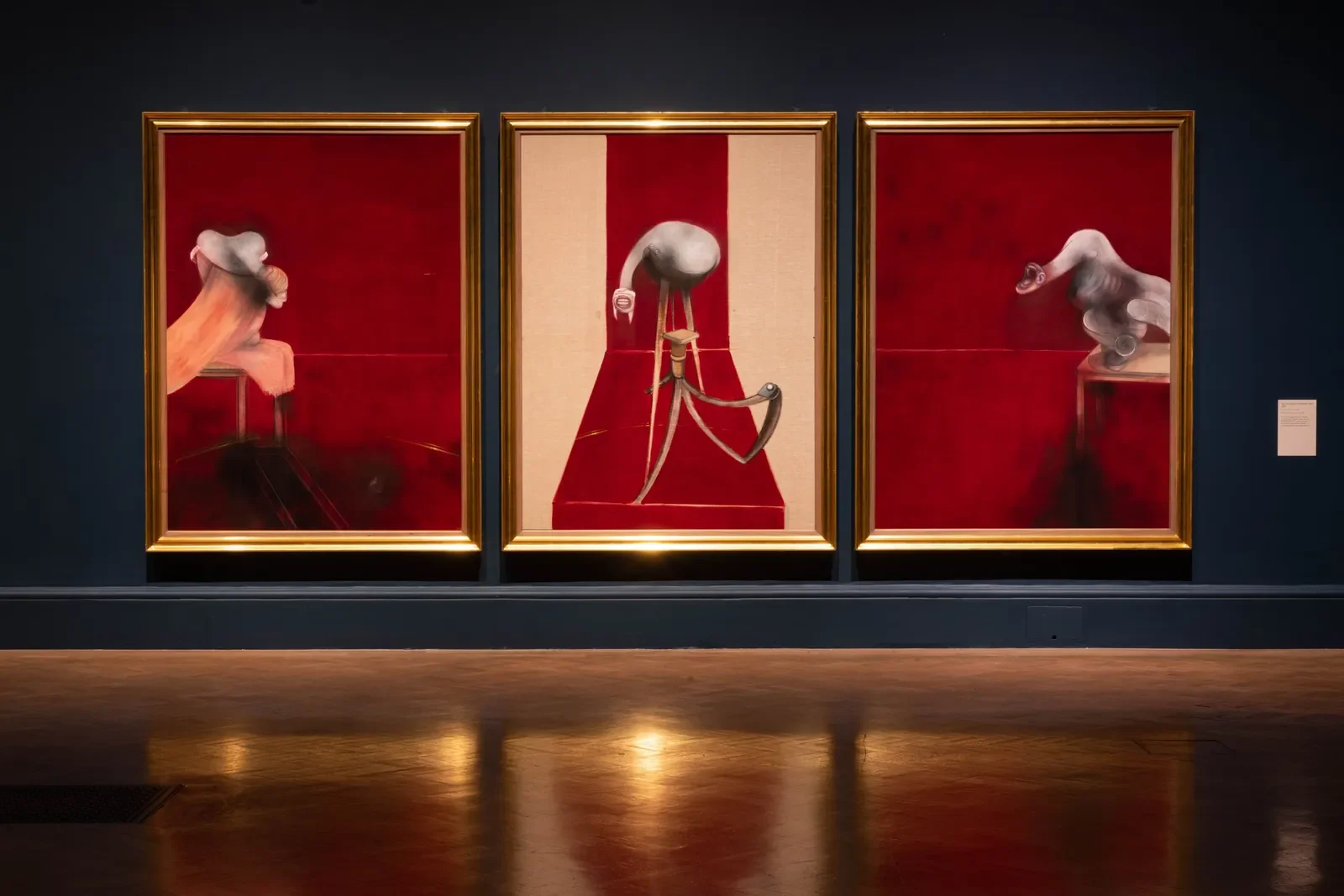
Bacon's paintings offer little religious consolation. Their figures are exposed, contorted, and often isolated within severe geometric structures. Proske draws on this visual language for the opera's final act, stripping away much of the realistic setting and arranging the drama around three figures against red panels.
Faith is equally important to her interpretation. Tosca is not simply a theatrical diva but a devout Catholic whose religious convictions are tested by Scarpia's cruelty. Her prayer in the second act becomes a genuine crisis of belief, one that the production carries into its conclusion.
Rather than presenting the final act entirely as a literal sequence of events, Proske introduces Tosca's memories and religious imagination. A recollection of her first communion enters the staging, while the shepherd's song that opens the act becomes the voice of a choirboy. Puccini's melody remains intact, but the words are changed, transforming a familiar musical passage into something resembling a childhood memory.
The effect brings Tosca's two worlds together: the church and the theater. Both have taught her to believe in things she cannot see. Both offer forms of consolation. Neither can protect her from Scarpia.
For Detroit Opera, the production features South African soprano Masabane Cecilia Rangwanasha as Tosca, Nathan Granner as Cavaradossi, and Alfred Walker as Scarpia, with music director Roberto Kalb conducting. It is the company's ninth staging of Tosca, presented during its 55th-anniversary season.
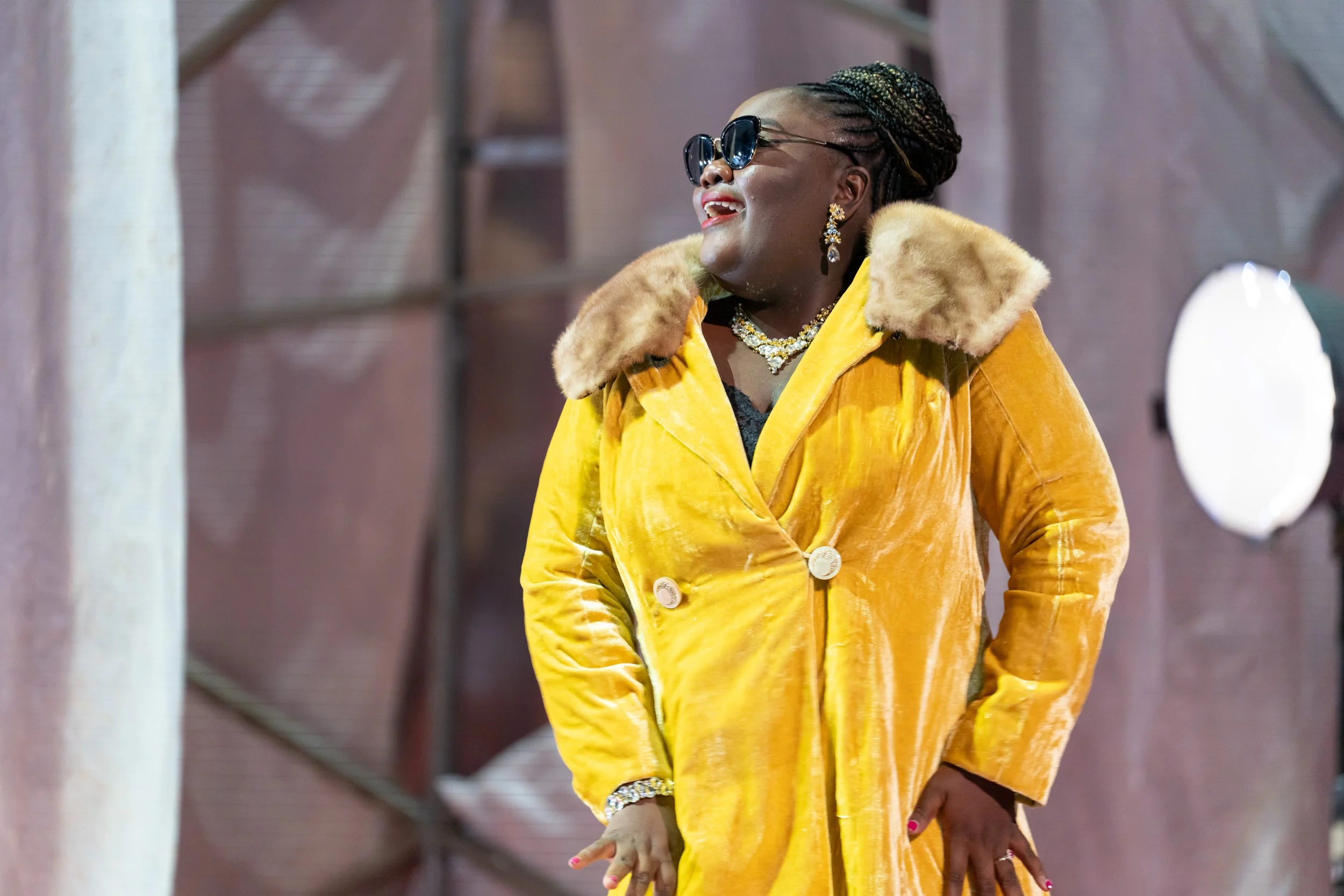
The opera's final deception is also its cruelest. Tosca believes she has secured her lover's freedom through a staged execution, complete with blank ammunition and instructions for how convincingly he must fall. She approaches the scene as a performer, confident that she understands the difference between illusion and reality.
Tosca knows how to perform a death. What she cannot imagine is that this time, the bullets are real.
Tosca — Detroit Opera
November 1, 5, and 7, 2026
Directed by Louisa Proske. Conducted by Roberto Kalb.
Sung in Italian. Approximately 2 hours and 45 minutes, including intermission.